
Here & There #11
Alison Roman’s clear-the-pantry soup, the new trackable suitcase we swear by, and artisan expert Annie Waterman on her favorite traditional craft regions & how to plan your own sourcing trip
You Should Meet… Annie Waterman
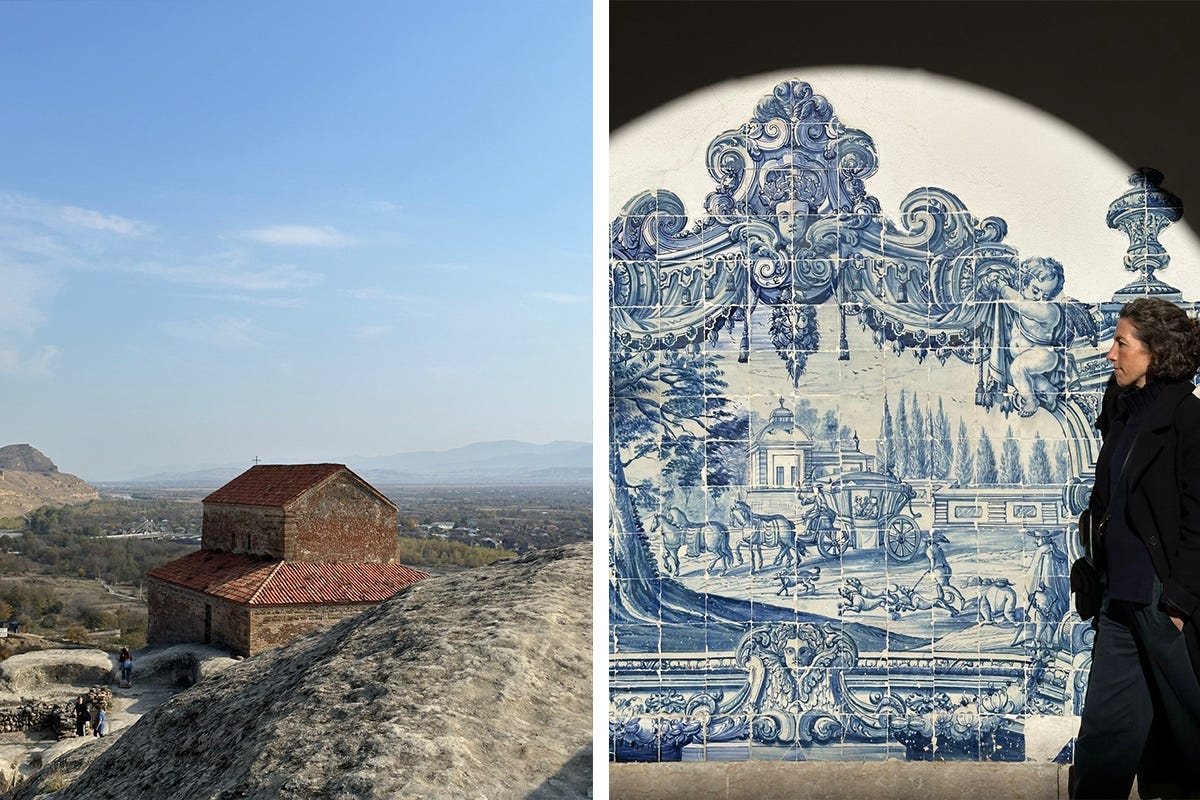
Our friend Annie Waterman is always traveling to regions with rich traditional craft cultures. As the founder of AOW Handmade, a company that connects artisans to global markets, her work takes her all over the world to source crafts and develop relationships with the people behind them. If you’ve ever spotted amazing ceramics from a tiny Portuguese village at your local West Elm, chances are Annie helped make that happen. We’ve previously published lists of her favorite artisan shops in Madrid, Paris and Lisbon, as well as dispatches from the Algarve and Asturias, and we’re so glad she shared more of her story with us here.
You have a seemingly amazing job—traveling around the world, meeting artisans, and connecting them to wider markets—how did you get started doing this?
When I look back on how I got started, I’d say it was when I began working for a small artisanal home decor company in Boulder, Colorado. At the time (18 years ago), it was one of the first brands I’d come across that was working directly with artisan communities in Peru, combining traditional techniques to create contemporary home decor. I did a bit of everything—from sourcing and product development to sales and accounting. It was a great experience that gave me insight into all sides of the business, and everything stemmed from there.
After about 4–5 years, I moved abroad to gain the field experience I’d been craving. I spent time in Latin America and Nepal, working with a few social enterprises in the same sector. Being on the ground helped me see firsthand the positive impact that creating market access for artisans can have on small communities. I was probably a bit naïve at the time, but it was pure passion that drove me.
When I returned to the U.S. after several years abroad, I joined ByHand Consulting and found what felt like my dream job. One of our key projects was developing Artisan Resource, a sourcing section of the NY NOW show. A colleague and I traveled the world, and the experience of learning under my mentors was invaluable. At that time, working with artisans wasn’t as mainstream as it is today—it often took serious convincing to get large retailers to collaborate with artisan groups. It’s been fascinating to watch that shift over the years.
After nearly five years with ByHand, I decided it was time to go out on my own and launched AOW Handmade. I saw a niche for working directly with brands on their artisan sourcing strategies. The timing was right, and there was huge demand. I’ve since had the honor of working with top retailers like West Elm, as well as mid-sized, artisan-focused brands such as The Citizenry. I’ve also collaborated with organizations like UNDP and UNHCR to help build out their artisan initiatives. In this field, it’s essential to understand both sides—the needs of the artisans and the buyers—and I try to be that bridge.
Most recently, I launched AOW Insider, a membership program for retailers and designers. It offers curated access to discover unique, artisanal brands and finds—essentially, a sourcing platform for those who love and appreciate handmade products, particularly in the home décor space.
What first sparked your interest in traditional craft?
I’ve always been drawn to artisanal goods. I have a vivid memory of my father—an adventurous traveler and photographer—bringing me back beautiful textiles from Bhutan. My mom, an interior designer, was always sifting through fabric swatches for her shop, constantly on the hunt for beautiful things.
One of my first experiences working in this field was a design project in Honduras—Carol Campbell, a longtime mentor and colleague, took the leap of faith by hiring me to design a line of handbags, working with a small community of leather and textile artisans. I designed the collection, and she helped bring it to market—this left a lasting impression. We first studied the local techniques and materials and together built a small collection for the export market.
Mimi Robinson was another source of inspiration. I really admired the program she founded, Bridging Cultures through Design. Its goal is to collaborate with craftspeople, leveraging traditional skills and local materials to help develop markets for their work. At the time, this was the only initiative bridging artisans and design that I could find—Mimi’s vision had a big influence on me and helped shape my career.
Have you been inspired to pick up basket weaving, ceramics, or any other crafts yourself?
I, of course, appreciate the process and have taken many pottery classes in the past, but photography is my medium. When marketing and sharing artisan stories, photography is everything, so about seven years ago, I attended a one-year photojournalism course through Magnum Photos to push my own photography skills and better market artisan products in a way they deserve and respect.
Before you set out on a sourcing trip, how do you do your research? Do you plan who you’ll meet with in advance or does it unfold more organically?
I always spend time researching, and if there is a regional show, I try to base the trip around that as a starting point. Attending small, regional shows is a great way to see the diversity of products throughout a country. I also strive to connect with regional contacts or colleagues whom I travel with, helping me to maximize my time in the country and connecting me to artisans that I can’t easily find. I also allow room and time for exploration when I am there.
Over the 18 years I have worked in this field, I have developed a large network, so I always rely on those I know and who are based in the country. Sourcing is largely about developing a strong network and reaching out to colleagues who know people and the place, assisting with introductions or referrals—knowing good people who really know the craft on the ground—connecting with locals who speak the language and understand the culture’s customs.
Can you share a couple of your most memorable sourcing trips?
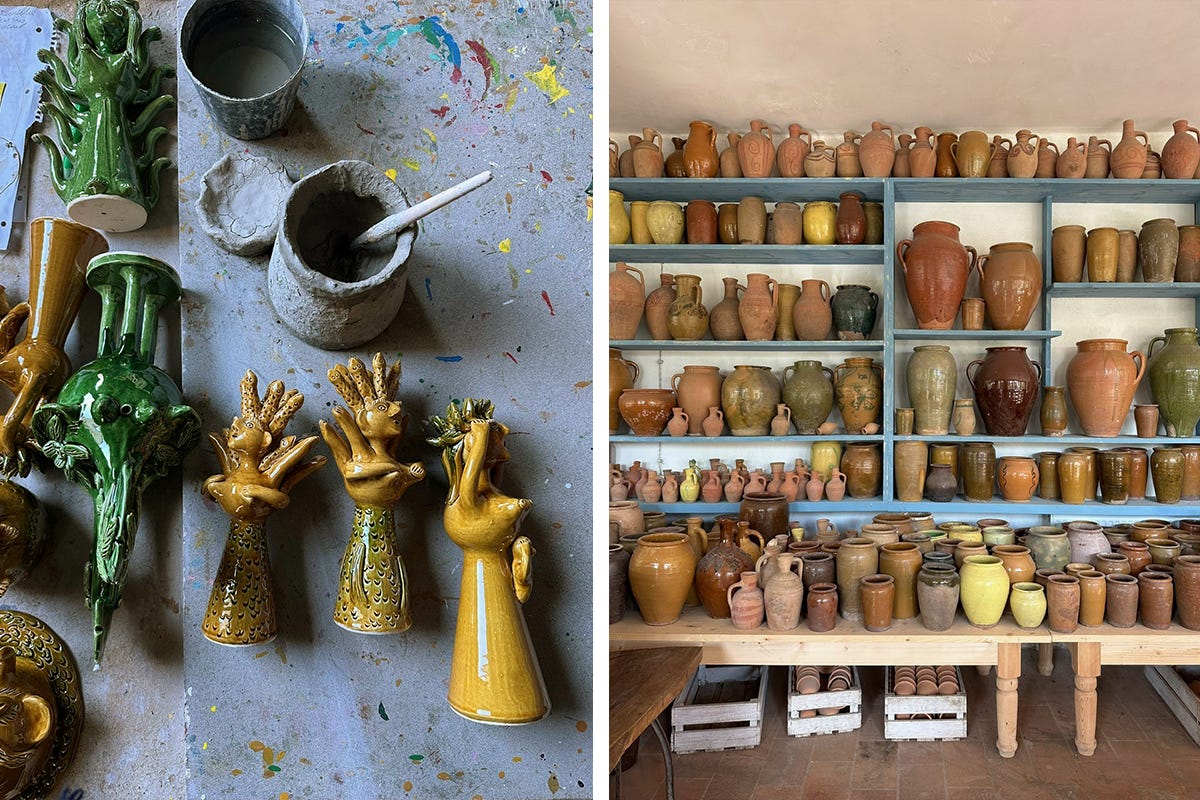
Georgia, Moldova, and Romania are countries that really stood out for their authenticity. They are places where you feel entirely immersed in the culture, without those things you can easily find and access at home. These places are becoming quite rare, and what I am most drawn to—this is where you can find the most interesting products too. The more remote, often, the more interesting the products.
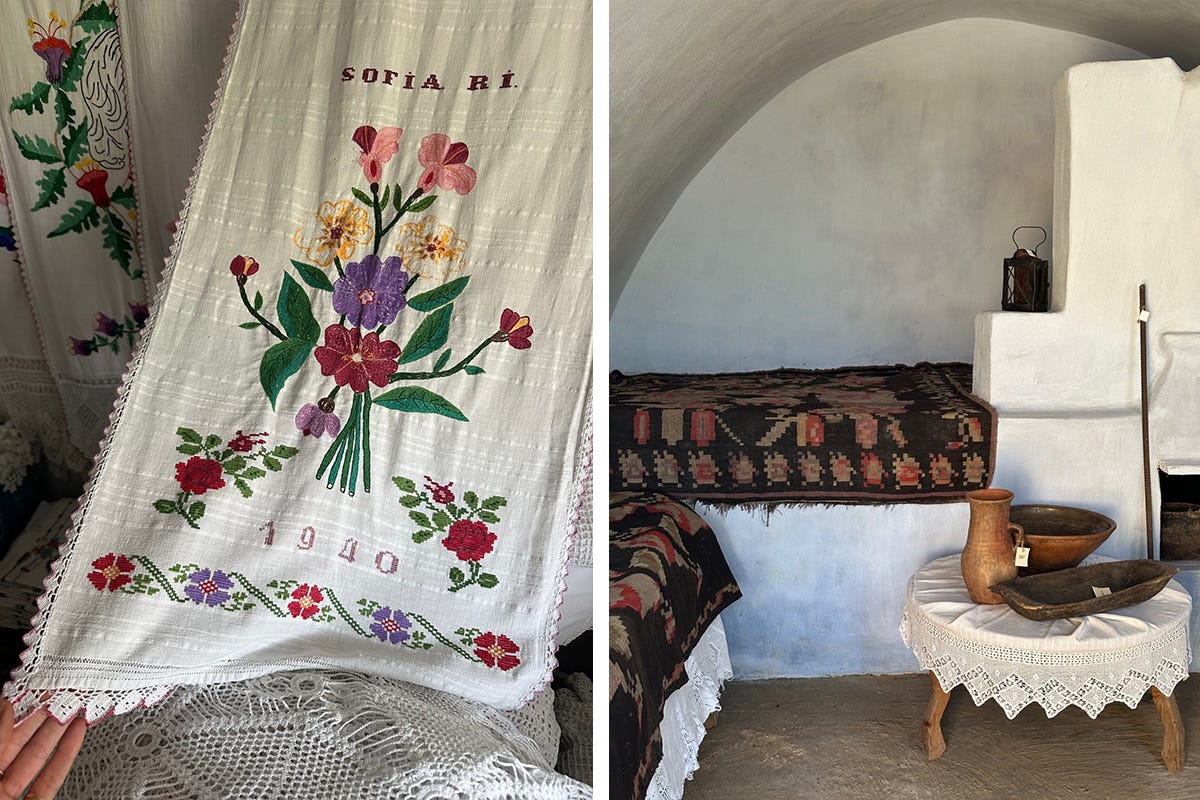
In Georgia, the traditional Adjarian embroidery stood out particularly. In Romania, the craft is particularly rich and diverse, particularly among traditional ceramics, where master artisans are spread throughout the country, including areas like Horezu, where I am writing from right now. The country, of course, also boasts some amazing woolen rugs, woodcarvings, and incredible blouses, some of which take years to create. What stood out in Moldova was the folk art apparel, including incredible embroidered blouses and traditional sheepskin vests!
What advice would you give to someone who wants to design their own trip around craft and makers?
For those interested in traveling through craft, I can certainly help, as I have created many bespoke sourcing/craft trips, working in collaboration with in-country partners in different countries over the years.
When giving advice, I first ask about the client’s main goals, whether it’s mainly about professional B2B sourcing or just shopping and leisure. Then, I consider which partners are needed to make it successful, which artisans might be interesting for the client to visit, and then I look into personal activities, such as how much travel and leisure time should be included, along with the hotel budget and the client’s preferred style. Defining the goals is crucial—whether it’s purely for pleasure and exploration or more focused on professional sourcing. These are two very different trips.
Why is it so important to keep traditional craft alive?
Without traditions, we lose our culture and cultural identity. Products are not just physical products, but reflect culture, artists’ sensibility and skills, and generations of know-how.
I’m also a big proponent of traditional techniques incorporating contemporary design - it’s just a fine balance, not to lose the essence of these products. The work of Onoracasa does this so well - beautifully merging traditional and modern. The work of Passa ao Futuro, too. We need to evolve because often these traditional projects are no longer functional and essential products as they once were, but also need to do so more mindfully, so we don’t lose important traditions and generations of cultural know-how. When speaking with designers, I would say we need to refine existing products more than tweak or change, as I am seeing this happen too often in the market. This is also what leads to the homogenization of products and the flattening of culture.
What’s a craft region that you’ve been to recently and that most excited you?
Gosh, so many—but most recently, Galicia. I attended Artesania de Galicia, a regional craft show in a small village in the countryside, and it was magical - I met incredible people, and it was such a soulful experience, which they created from the curation of artisans selected to exhibit, along with local food purveyors and chefs. It was quite special - I wish more shows around the world were done this well. And people were buying, the artists were busy with orders, it was all around inspiring.
Are there any instances where a region is getting too much attention in a way that’s detrimental to preserving its cultural heritage?
In most old markets and souks you walk through today—from Marrakesh to Istanbul, and even in places like Albania—you’ll find an influx of cheaply made items imitating handmade local products, often imported from large factories in China. This seems to be happening everywhere and has a noticeably detrimental impact.
Mass tourism in specific cities and areas causes a rise in businesses, but that rise eventually reaches a tipping point—where the experience is no longer what it once was, pushing tourists away and ultimately leaving the country worse off. This is detrimental, and I see it happening in cities around the world. Places that were once a pleasure to experience—like the souks in Morocco—have changed quickly. It’s becoming more and more difficult to find authentic products in the mix; sometimes, you need an expert eye to distinguish what’s real from a copy.
Any favorite markets or artisan shops to visit in your hometown of Paris?
AXS Design, Landline, La Trésorerie, and La Maison de Commerce in Paris. And the small local Saturday/Sunday flea market in Vanves.
What are a couple of pieces in your own home with great stories you like to tell?
I have a collection of baskets from my travels—from master weavers in Sardinia, the West Bank, Latvia, Portugal, and the list goes on. Because they are natural in color, they look beautiful together and remind me of the experiences I had with the artists during my travels. It’s fascinating to see similarities among techniques from one country to another.
What places/craft communities are still on your wish list?
For next year, so far, Mongolia, Poland, and Hungary are on my list. And in a few weeks, Bhutan.
A favorite unexpected find?
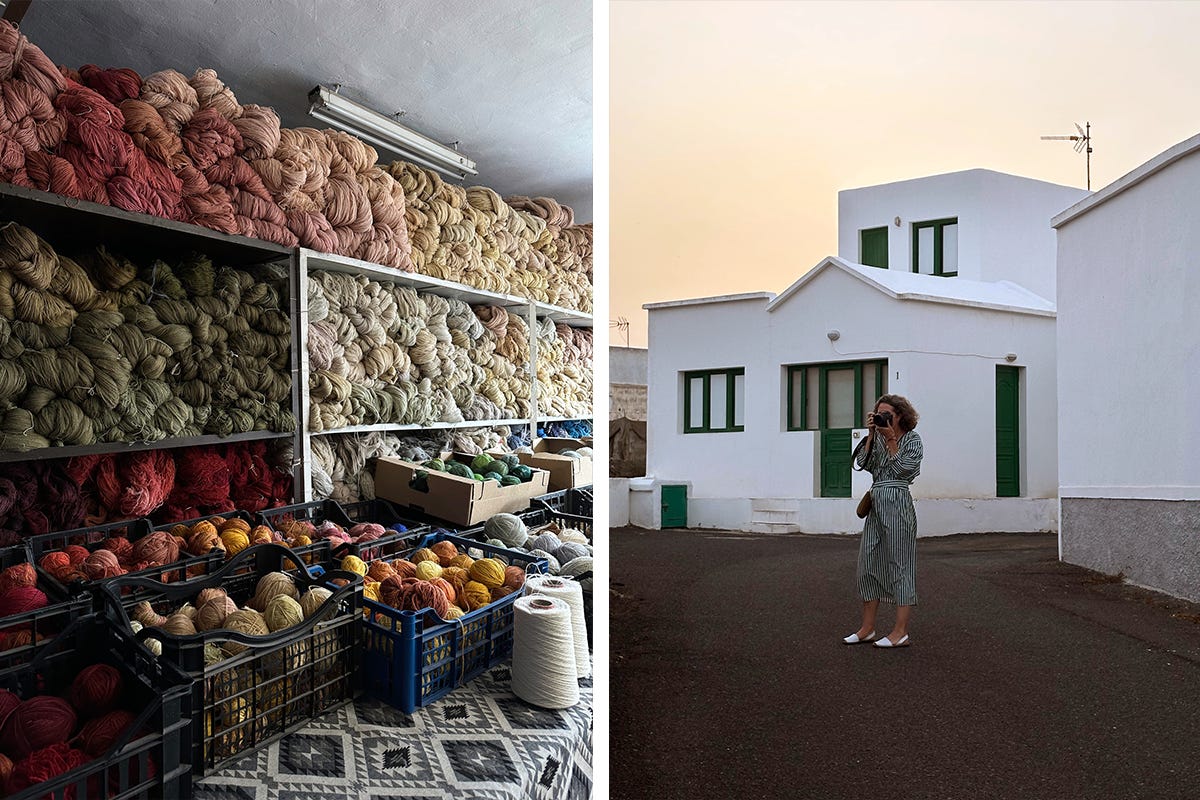
I recently came across some beautiful pottery in Lanzarote, as well as exquisite craftsmanship from Galicia. The leatherwork and skill in Galicia really stand out. I have a membership where I share all my findings, including a recap of this show in Galicia, highlighting a list of the artists who stood out.
Something you’ve been on the hunt for that still eludes you?
These things often just come to me—I usually start with a country and then things unravel from there.
A great hotel (or B&B or inn) discovery on a sourcing trip?
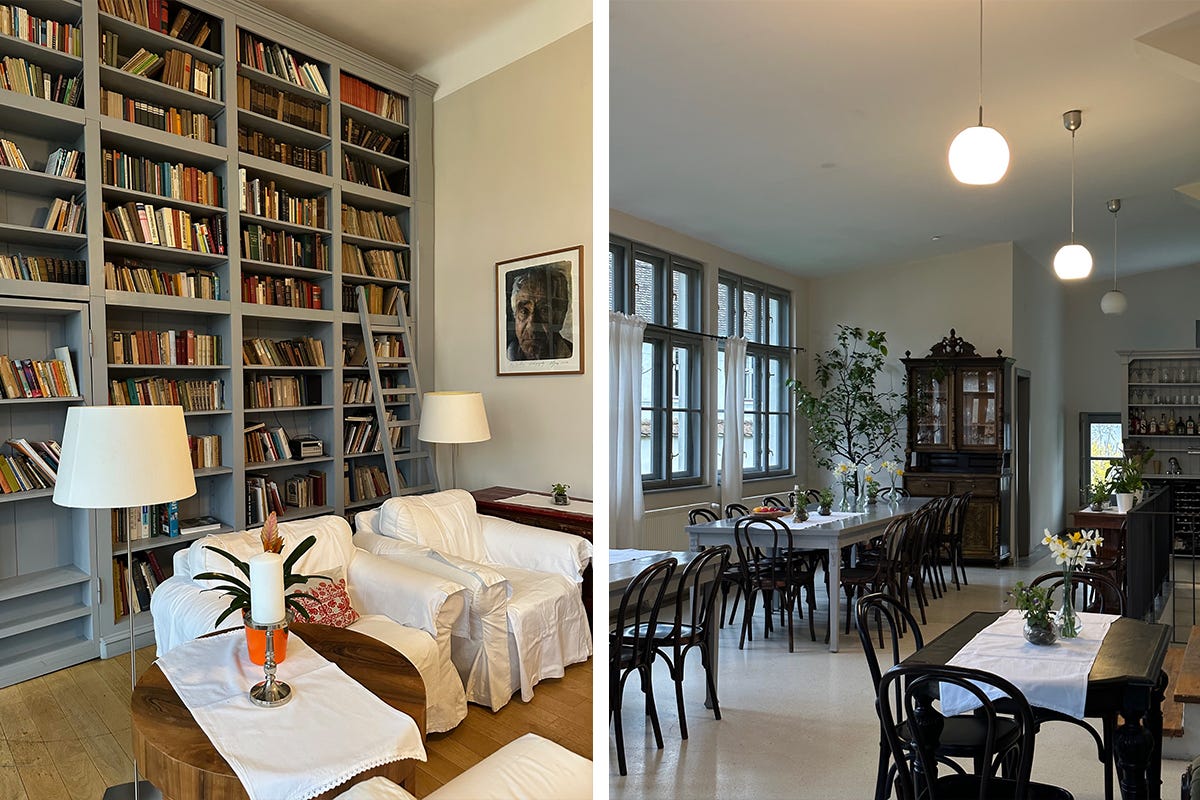
I really fell in love with Transylvania—it feels like the Provence of Eastern Europe. I can’t wait to get back there. The Cincsor Guest Hotel was a really charming and memorable experience. It also offered incredible local food.
I also love exploring the gorgeous old posadas throughout Portugal, and La Buit & Le Jour in Médoc, France, was also really charming.
A design pet peeve?
Copying traditional designs and producing them cheaply in other countries has become widespread. For example, when you see a traditional Berber rug made in India! This is really destructive. Machine-made copies of traditional handmade products now appear in mass retailers. This is really harmful because the average consumer can’t tell the difference—and will, of course, opt for the cheaper version.
More broadly, I see too much tweaking and altering of traditional products and techniques, rather than refining them or working with what artisans already do—and do well!
Tips for shipping your finds home?
If you’re seriously looking to buy, you should establish a professional partnership with a local shipping company that can handle all the export logistics for you. I always strive to have an experienced partner on the ground in each country where I work. If I know it’s a region where the craft comes primarily from small artisan workshops that can’t handle shipping, having someone local who can assist with logistics is key.
You can also ask another existing wholesale company to see if they have any recommendations. People often underestimate the value of a middleman. Or bring an empty suitcase!
Road Tested: July Luggage
By Carly Shea
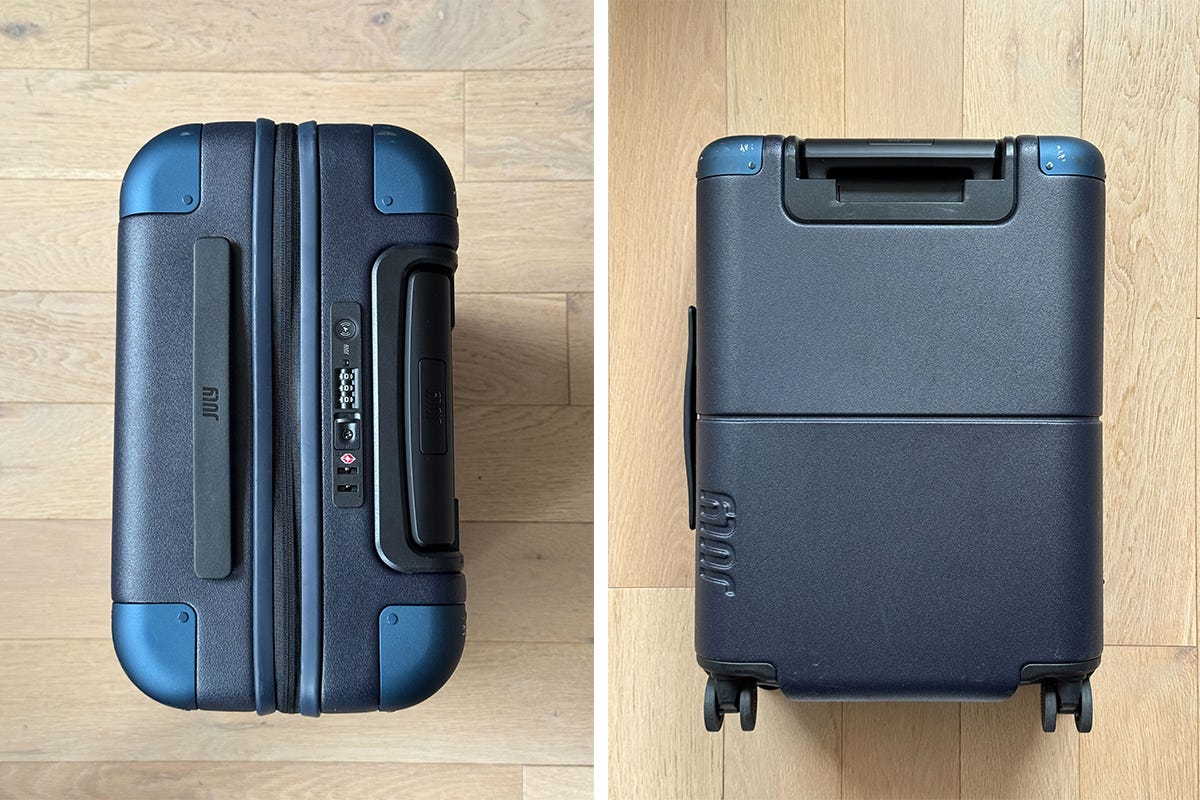
Did you know wheels were only added to suitcases 55 years ago, and locks just 20 years ago? The category has had a painfully slow evolution. A few years ago we all started popping AirTags into our bags, and now the Australian luggage brand July is the first to fully integrate tracking directly into the suitcase.
I tested their new CaseSafe bag on a trip to Austria last month, and after eight years of schlepping my Away bag everywhere from Boston to Bosnia, I was excited for the upgrade. July has all the features you’d expect from high-performing luggage: an ejectable power bank, multi-stop handle, TSA-approved lock, nylon lining, 360-degree wheels, polycarbonate shell, lifetime warranty. I also loved the reinforced corners and the compression pad in the center opening, which feels sturdier than the slightly flimsy one in the Away.
On my return flight, my suitcase took its sweet time getting unloaded onto the baggage carousel, but being able to see its exact location in real time was so reassuring. What’s especially great about July’s CaseSafe technology compared to an AirTag is that it’s compatible with both Apple’s FindMy for iPhone users and Google’s Find Hub for Android users (and both are seamless to set up).
Pairing the suitcase to my phone took about 30 seconds while my Uber was pulling up. You just pull the little plastic tab inside to activate the tracker, open FindMy > Items > Add New Item, tap “pair”, and voilà. The tracker is built discreetly into the top interior of the bag, so it can’t be removed by anyone else, but is easy for you to locate. Honestly, that’s one of the best parts—no more losing AirTags in the lining of a bag or forgetting to shuffle them from one suitcase to another. It’s one less thing to remember, and one more part of traveling that finally feels as smart as it should.
The Recipe: Dilly Bean Stew with Cabbage and Frizzled Onions
By Alison Roman
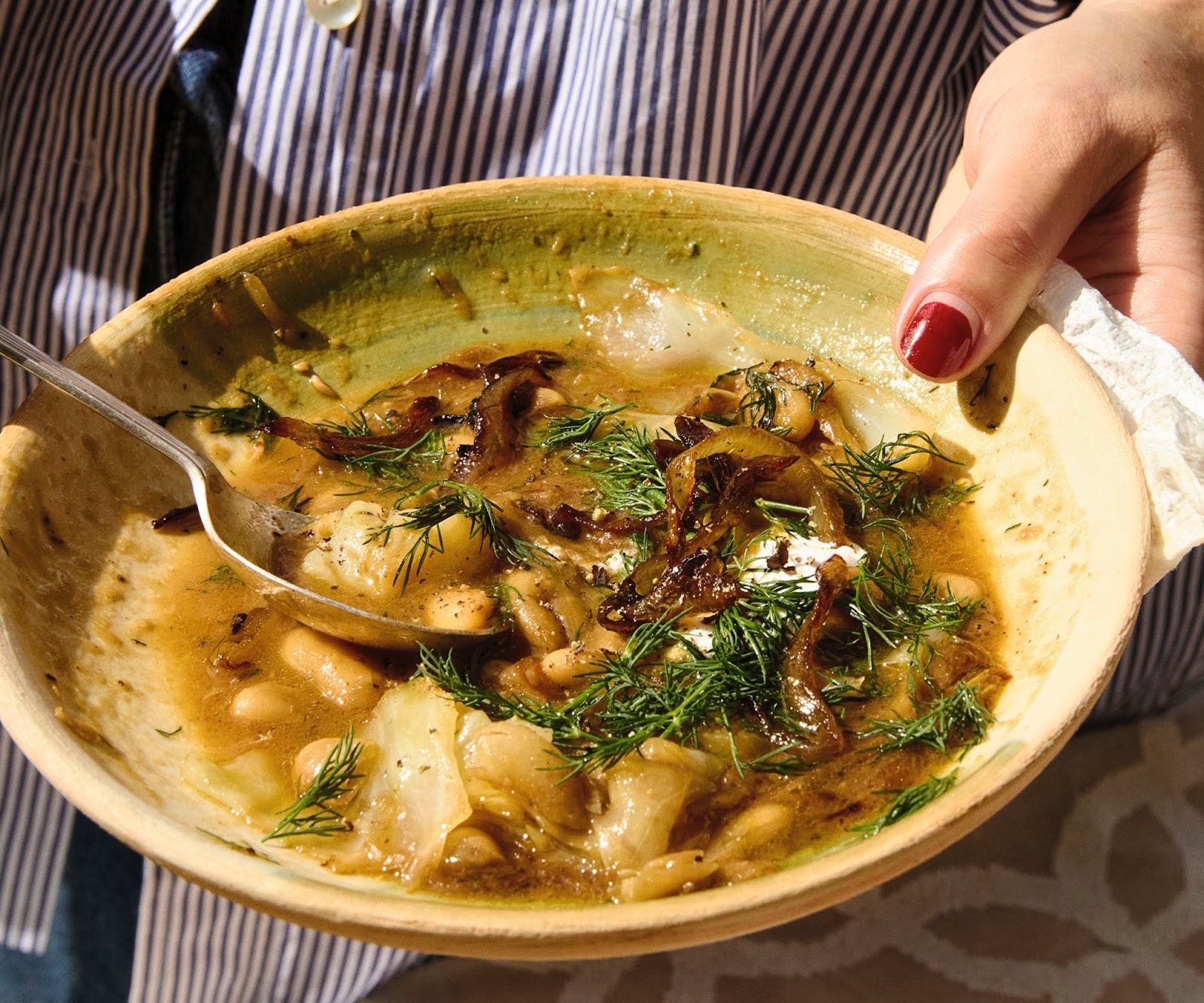
Longtime followers of Alison Roman know her gospel well: brothy beans, lots of herbs, and the sort of soups and stews you can make from whatever’s already in your pantry or fridge. This recipe is exactly that—comforting, unfussy, and what we crave on a cold night when the idea of going to the store feels out of the question. Her new cookbook, Something From Nothing, is rooted in this spirit: the belief that whatever you have on hand, be it a humble head of cabbage or cube of bouillon, can become something far greater than the sum of its parts with a bit of creativity.
It’s also so practical for weekends away, when you don’t want to buy a dozen tinctures of spices you’ll just leave behind. If you’re planning an upstate weekend this season, her shop, First Bloom, is the place to stop and provision: really good olive oil, fresh produce from nearby farms, snacks for the drive. For those staying closer to home, they’re popping up at Maretta in NYC through November 30th, so you don’t have to plan a whole trip around stocking up on the best cannellini beans—though we’d fully understand if you did. —CS
Some recipes are born from cooking something I think is delicious, and some are born from a name that I think sounds good. The latter is the case with Dilly Bean Stew, which contains beans and dill (lots of it) and is tangy like a jar of pickled dilly beans. I thought this was very clever: “A star is born,” I said out loud, to nobody in particular.
As with any pantry-staple situation, the low number of deceptively modest ingredients in this recipe might lead you to believe that it doesn’t have what it takes to be your new favorite stew-but l assure you, it does. Two secrets: The onions must be frizzled (somewhere between caramelized and fried) for the correct depth of flavor, and the beans must be cooked and lightly crushed before any liquid is added (or your stew will forever be a soup). While it might seem like overkill, I do highly recommend the pat of butter at the end, which truly takes this stew from humble to luxurious.
2 tablespoons unsalted butter, plus more (or more olive oil)
2 tablespoons olive oil, plus more
1 large yellow onion, thinly sliced
Kosher salt
Freshly ground black pepper
2 (15-ounce) cans white beans, such as navy, butter, or cannellini, drained and rinsed
4 cups vegetable or chicken broth (or water plus Better Than Bouillon)
¼ head cabbage, core removed, coarsely chopped (about 8 ounces/2 cups)
2 tablespoons white distilled vinegar or fresh lemon juice, plus more
1 cup dill, coarsely chopped
Sour cream, for serving (optional)
Dilly Bean Stew can be made 5 days ahead, sealed and refrigerated. It also freezes beautifully, sealed and frozen up to 2 months ahead (probably more).
Heat the butter and olive oil in a medium pot over medium-high heat. Add the onion and season with salt and pepper. Cook, without stirring too much or too frequently, so the onions get nicely browned and frizzled, 5-8 minutes. You do not want jammy, caramelized onions, but you also do not want burnt onions, so just adjust the heat and stir as needed. Using a slotted spoon, transfer one-quarter of the onions to a small bowl; set aside.
Add the beans and season with salt and pepper. Using a spoon, smash some of the beans, breaking them up to release the creamy, starchy interior (this is what will thicken your stew). I say “some of” because we are not making refried beans, nor are we making bean puree. Think whole, tender beans swimming in a pot of creamy, broken-down, lightly brothy beans.
Add the broth and bring to a simmer. Simmer until the texture is to your liking (soupier, stewier-you choose) and everything is tasting nice and savory, 15-20 minutes. Add the cabbage and vinegar, stirring to wilt. Simmer until the cabbage is totally tender and all the flavors have melded, 10-15 minutes. Season with salt, pepper, and more vinegar if you like.
Remove from the heat and stir in half of the dill. Divide among bowls and top with more dill and some frizzled onions. Add a teeny knob of softened butter-live a little-or a drizzle of olive oil and, if the mood strikes, some sour cream.
Something from Nothing Copyright © 2025 by Alison Roman. Photographs copyright © 2025 by Chris Bernabeo. Published by Clarkson Potter, an imprint of the Crown Publishing Group, a division of Penguin Random House LLC
Regarding the topic of the article, Annie's work sounds truly meaningfull. It makes you wonder about the careful balance between global markets and preserving local craft authenticy.